
Rice University and M-I SWACO – the world’s leading drilling fluid company – have signed a research agreement to apply advances in nanotechnology to improve wellbore flow rates.
The goal of the project is to study the addition of nano-sized graphene additives to drilling fluids to prevent complications during drilling operations. M-I SWACO is funding the project with USD 450,000 over two years, to be conducted in the university’s materials science and informatics laboratories.
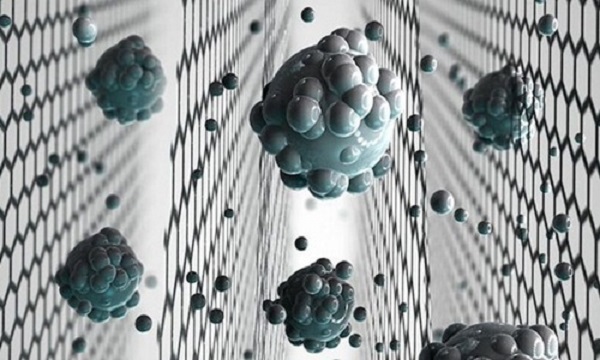
“Graphene is a single-atom-thick sheet of carbon — the thinnest and most lightweight material known, essentially with a 2D structure. In the lab, graphene sheets can be made with diameters of up to 25 μm and thicknesses of just 1 nm. Research has shown that even in very small amounts, graphene has the ability to effectively seal filtration pores.”
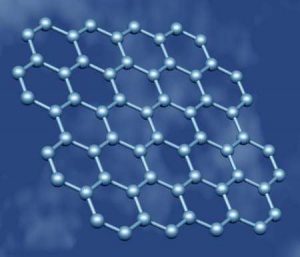
Graphene is a honeycomb-like crystal lattice at the atomic scale, composed entirely of carbon atoms. Fundamental research on graphene and graphene oxide began in 2004. These nano-materials are environmentally friendly, derived from naturally occurring graphite deposits.
Current research aims to:
-
Understand how graphene behaves in water to effectively seal pores in reservoir rocks.
-
Develop optimized drilling fluid formulations containing graphene.
-
Investigate how the sealing performance of graphene may be affected by other compounds present in drilling fluids.
In conventional drilling operations, water- or oil-based drilling fluids are pumped down the wellbore to clean the drill bit and carry cuttings back to the surface. However, these fluids – even when blended with various chemical additives – often fail to seal microscopic pores in the formation, potentially leading to wellbore instability and formation fluid influx.
The new approach uses a combination of oil-dispersed graphene and water-dispersed graphene oxide at the nanoscale. Under downhole pressure, these particles rapidly form a thin filtration layer along the wellbore wall, effectively plugging pores. When hydrostatic pressure is reduced (e.g., when pulling the drill string or lowering mud weight), the reservoir pressure breaks this filter cake, allowing hydrocarbons to flow naturally into the wellbore.
According to James Bruton, Vice President of M-I SWACO, this is the right time for the company to evaluate the potential of nanomaterials in drilling fluids, especially considering that drilling fluids can cost USD 200–300 per barrel, and a single well in the Gulf of Mexico may require up to 20,000 barrels. Optimizing drilling fluid performance is therefore crucial for cost efficiency.
In the coming years, research will continue to focus on integrating graphene into drilling fluids and related products, enabling safer and more efficient drilling operations under increasingly complex geological conditions.
