

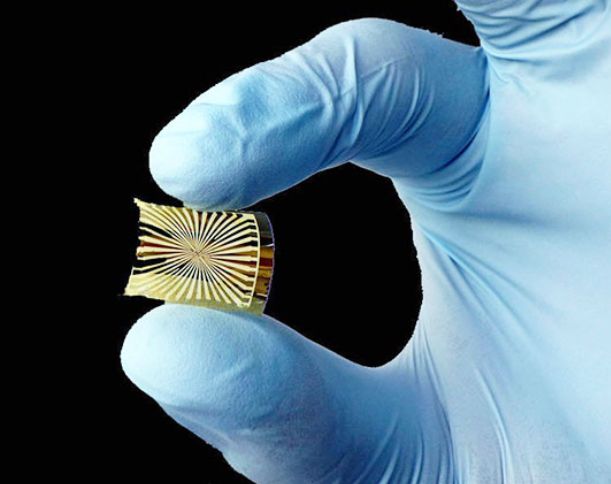
A research team from the National University of Singapore, led by Professor Loh Kian Ping, has successfully developed an improved method to produce and transfer high-quality graphene onto silicon and various other rigid substrates. This breakthrough paves the way for the use of graphene in high-value applications that were previously technologically unfeasible.
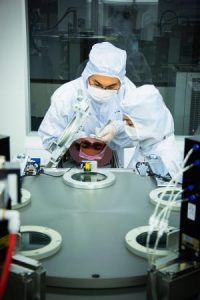
This breakthrough is inspired by the way bees and tree frogs cling to submerged leaves. The technique enables the integration of graphene into photonics and electronics, allowing applications in devices such as optoelectronic modulators, semiconductors, and on-chip biosensors.
The demand for graphene in silicon-based industries
Graphene has attracted global attention in recent years due to its exceptional electronic, optical, and mechanical properties, as well as its potential as a transparent conductive film for touchscreens and electrodes. However, producing high-quality graphene films remains challenging, largely due to the lack of scalable techniques to grow and transfer graphene with minimal defects for use in the semiconductor industry.
Professor Loh explained:
“Although there are many potential applications for flexible graphene, it is important to note that most semiconductors still operate on rigid substrates such as silicon and quartz.”
“Directly growing graphene films on silicon wafers is highly beneficial for numerous optoelectronic applications, but current research efforts remain largely at the proof-of-concept stage.”
Inspired by bees and tree frogs
To address this technological gap, Professor Loh’s team drew inspiration from the way bees and tree frogs use capillary bridges to cling to leaves underwater, and developed a new process called “face-to-face transfer.”
Dr. Gao Libo from the Graphene Research Centre at the NUS Faculty of Science successfully grew graphene on a copper catalyst layer deposited on a silicon substrate. Once the graphene was formed, the copper catalyst was etched away, while the graphene layer remained in place thanks to the formation of tiny capillary bridges — similar to those found around the legs of bees and tree frogs that help them adhere to submerged leaves. These capillary bridges keep the graphene in contact with the silicon surface and prevent delamination during the copper etching process.
To facilitate the formation of these capillary bridges, Dr. Gao carried out a pre-treatment step that involved injecting gas into the silicon wafer. This modified the interface properties and promoted the formation of capillary bridges during the wet etching of the catalyst layer.
Industrial applications and future perspectives
This novel technique of directly growing and transferring graphene onto silicon wafers and other rigid substrates offers significant promise for building graphene-on-silicon platforms, which could unlock numerous applications in next-generation electronics and photonics.
