

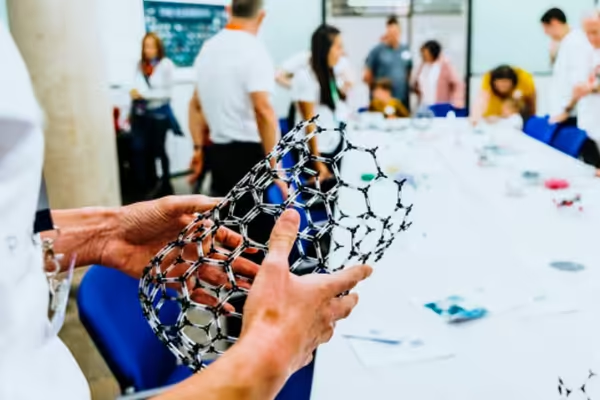
After the invention of flexible solar panels, scientists are now close to introducing a type of “smart wallpaper” that can absorb light and heat to supply energy for homes in just a few years.
According to The Telegraph, engineers at the University of Surrey (UK) have used a butterfly-eye-inspired design to create ultra-thin, paper-like energy-absorbing sheets that can achieve up to 90% efficiency even under low-light conditions.
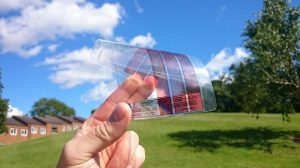
Smart wallpaper made from the supermaterial graphene could one day power entire homes.
The research team revealed that graphene – a material only one atom thick – can be used to create solar panels with higher energy absorption compared to current materials. For this reason, the scientists investigated how animals adapt to darkness. They discovered that moths have evolved in a remarkably clever way to maximize the amount of light they absorb.
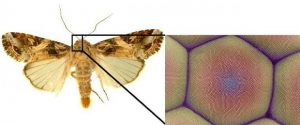
The eyes of moths are covered with tiny mirror-like structures that direct light toward the center of the eye. Scientists have mimicked this natural design to create highly efficient solar panels.
This ultra-thin nanomaterial paves the way for future applications such as “smart wallpaper” capable of generating electricity from light or heat.
Professor Ravi Silva, Director of the Advanced Technology Institute, said:
“Nature has evolved in incredibly efficient ways, and from that we find inspiration to overcome future technological challenges. The micro-mirrors in moths’ eyes allow them to see in very low-light conditions, and we applied the same principle to create a thin material that captures light in the most efficient way possible using graphene.”
When solar cells are coated with this material, they can absorb even the faintest light rays. A house equipped with “smart wallpaper” or “smart windows” could produce electricity from ambient light or heat.
“Graphene is already recognized as a material with excellent thermal conductivity and mechanical strength,” Professor Silva added. “However, we had to apply an insulating method called nanotexturising to enhance graphene’s light-absorbing capabilities.”
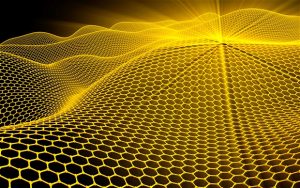
Ultra-Thin Graphene Material
Dr. José Anguita from the University of Surrey, the lead author of the study, remarked:
“Because of its extreme thinness, graphene can only absorb a very small fraction of light on its surface. This means graphene alone is not ideal for next-generation optoelectronic technologies that require superior light absorption.”
The graphene-based metamaterial, with its nanoscale architecture, is designed to guide light into narrow spaces between its nanostructures — significantly increasing the amount of light absorbed.
“At present, we have been able to observe exceptionally strong light absorption from these ultra-thin nanofilms,” Dr. Anguita added. “Typically, a single layer of graphene absorbs only 2–3% of incident light. Using this new method, the nano-coated graphene metamaterial can absorb up to 95% of light across a broad spectrum, from ultraviolet to infrared.”
This breakthrough suggests that in the future, homes could be decorated with “smart wallpaper” capable of harvesting even the faintest ambient light to generate power.
